
A mushroom frittata should taste like the best parts of a Sunday brunch without the wait or the mediocre eggs.
You know the one: burnished edges that shatter when your fork hits them, a custardy middle that wobbles just slightly when you shake the pan, and mushrooms that actually taste like mushrooms instead of spongy water bombs.
Most recipes treat frittatas like an egg casserole you throw together when you’re too lazy to flip an omelet. That’s why they turn out rubbery, watery, or aggressively bland.
This version respects the process. You’ll sear the mushrooms until they’re deeply golden. You’ll add the eggs at exactly the right temperature.
The result is a dish that works for breakfast, lunch, dinner, or that awkward 4 p.m. meal when you’re starving but dinner feels too far away. It’s a dish that those who love mushrooms will rejoyce over.
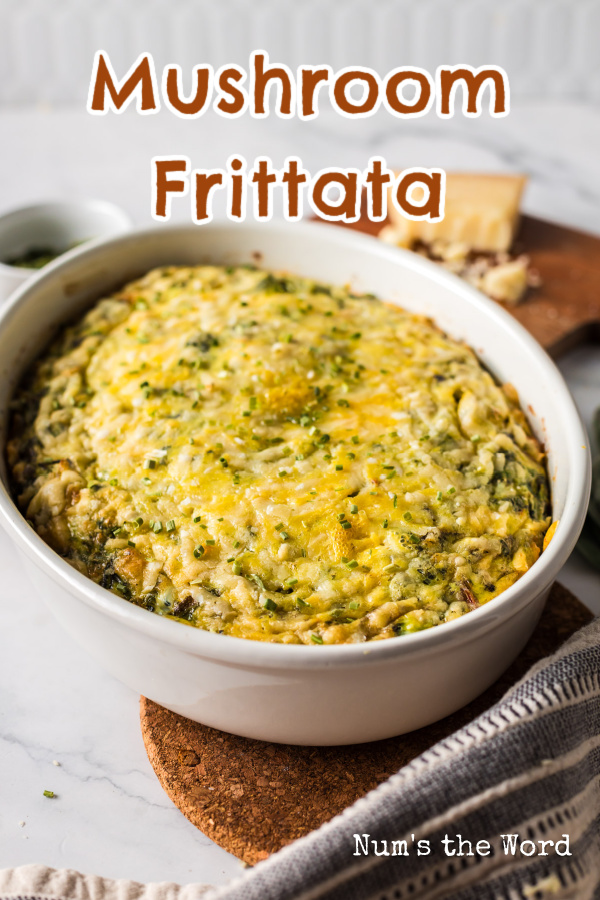
Where Frittatas Come From and Why They Work
Frittatas are a personal favorite of many because they are essentially a crustless quiche but even better. Frittatas are Italy’s answer to the egg scramble, but slower and way more elegant.
Unlike omelets, which require finesse and a good wrist flick, frittatas are forgiving. You cook them low and slow on the stovetop, then finish them in the oven or under the broiler.
This method was born out of practicality: use whatever vegetables, cheese, or leftover meat you have, bind it all with eggs, and call it a meal. A versatile dish that uses up heaps of eggs in one meal.
Mushroom frittatas specifically became a staple because mushrooms are cheap, available year-round, and soak up butter and aromatics like nobody’s business.
In Italian home cooking, frittatas were never meant to be fancy. They were a quick lunch for farmers, a way to stretch a handful of eggs into something filling.
That humble origin is exactly why they work so well today. You don’t need specialty ingredients or advanced skills. You just need to respect the technique.
The key evolution in modern frittata-making is understanding heat control and moisture management.
Traditional recipes often skip the step of properly cooking down the vegetables, which leads to a watery, sad result.
Once you nail the initial sear and know when to pull the pan off the heat, you unlock a dish that’s versatile, reliable, and way more impressive than the effort required.
Why This Recipe Works
This recipe works because it treats mushrooms and eggs as two separate problems that need individual solutions before they ever meet in the pan.
Mushrooms are 90 percent water. If you dump them into a pan with eggs without cooking them down first, they’ll leach moisture into your frittata and turn the whole thing into a soggy mess.
The fix is simple: sear them hard and fast in a hot pan until they release their water, that water evaporates, and the mushrooms start to brown. That browning is where the flavor lives.
It’s the difference between fungi-flavored rubber and something deeply savory with a hint of umami and sweetness.
The cheese goes in two places: half during the first bake and the other half during the second bake.
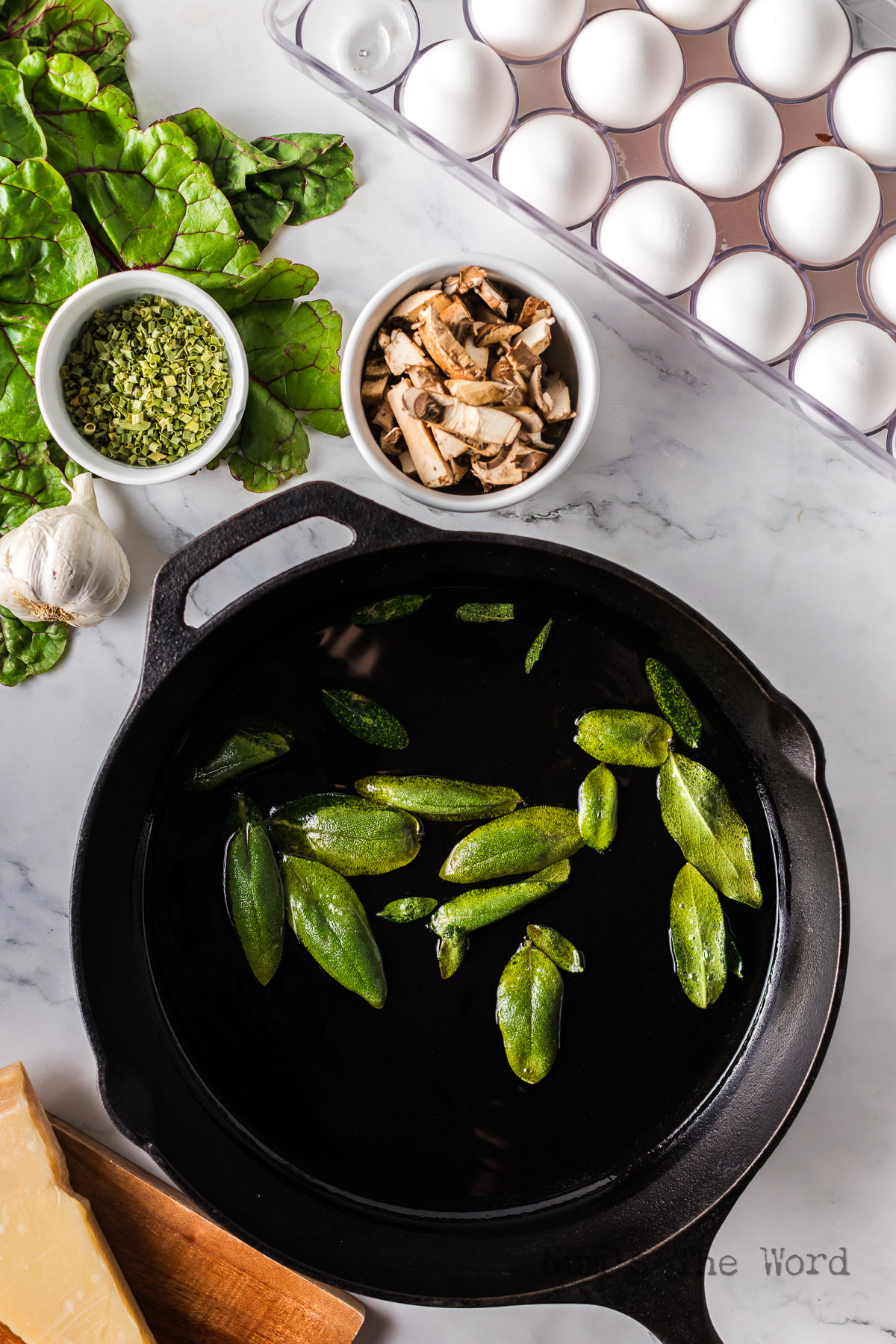
Ingredients and What They Do
Every ingredient in this frittata has a job, and understanding what each one does will help you make smart swaps and adjustments.
- 20 leaves of fresh sage:
- 4 cloves garlic, minced: Garlic should go in after the mushrooms have browned and the heat has been lowered slightly. If you add it too early, it burns and turns bitter.
- 1 pound baby bell mushrooms: Clean mushrooms with a damp towel instead of running them under water, which makes them soggy. You could also use white button mushrooms if baby bells aren’t available.
- 1 bunch of swiss chard: Stems ok too, wash and chopped. This cooks down quite a bit so don’t panic when you look at the size of the leaves.
- 18 large eggs: The foundation. Eggs provide structure, richness, and protein. Large eggs are the standard in most recipes, and using a different size will throw off the ratio.
- 1/2 cup milk: A small amount of dairy makes the eggs creamier and helps them stay tender. Whole milk works. Heavy cream makes the frittata richer. Skip it entirely if you want a firmer, more protein-forward texture
- 1/2 cup grated parmigiano reggiano cheese: Parmesan Reggiano brings sharpness and salt. Use pre-grated cheese if you’re in a hurry, but freshly grated melts smoother.
- 2 tablespoons olive oil or butter: Fat is essential for browning the mushrooms and preventing the eggs from sticking. Butter adds richness and a slightly nutty flavor. Olive oil has a higher smoke point and a cleaner taste. Use what you like, or split the difference and use one tablespoon of each.
- Fresh chives: Herbs should be added at the very end so they stay bright and fragrant.
- Olive Oil: A healthy oil that keeps everything from sticking.
Instructions
Cooking a frittata is less about following a timer and more about watching, smelling, and adjusting as you go.
- Preheat Oven. Set oven to 350*F
- Prep the mushrooms. Slice them about 1/4 inch thick. If they’re too thin, they’ll disintegrate. Too thick, and they won’t cook evenly. Consistent thickness matters more than perfect uniformity.
- Heat the skillet. Add the butter or olive oil to your oven-safe skillet and heat over medium-high until the fat shimmers. If you’re using butter, it should foam but not brown.
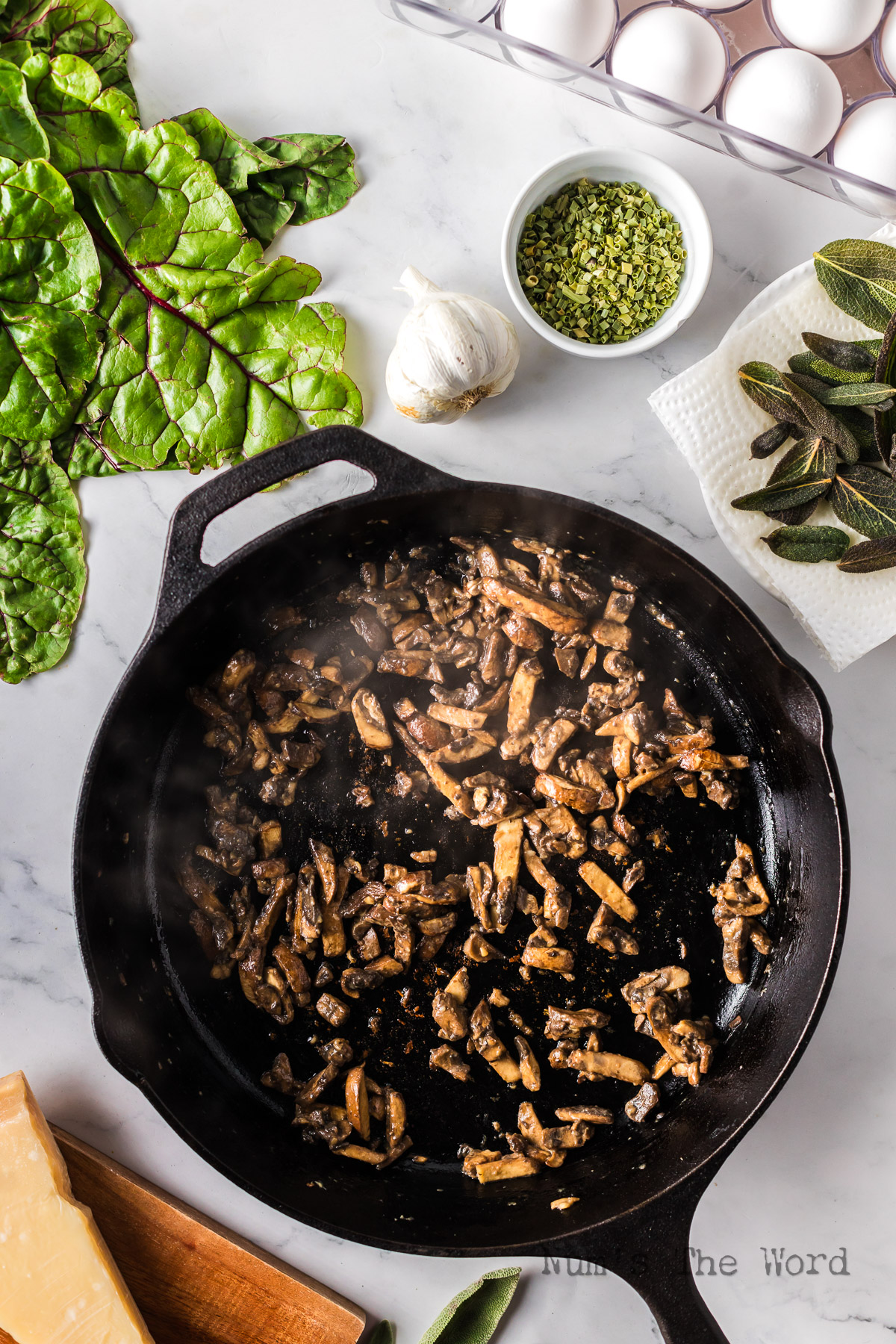
- Sear the mushrooms. Add them in a single layer if possible. Don’t stir them for the first 2 to 3 minutes. Add a pinch of salt. Let them sit and develop a golden crust on one side. Then stir and cook for another 3 to 4 minutes until they’ve released their moisture and most of it has evaporated. The pan should look almost dry, and the sauteed mushrooms should be shrunken and browned.
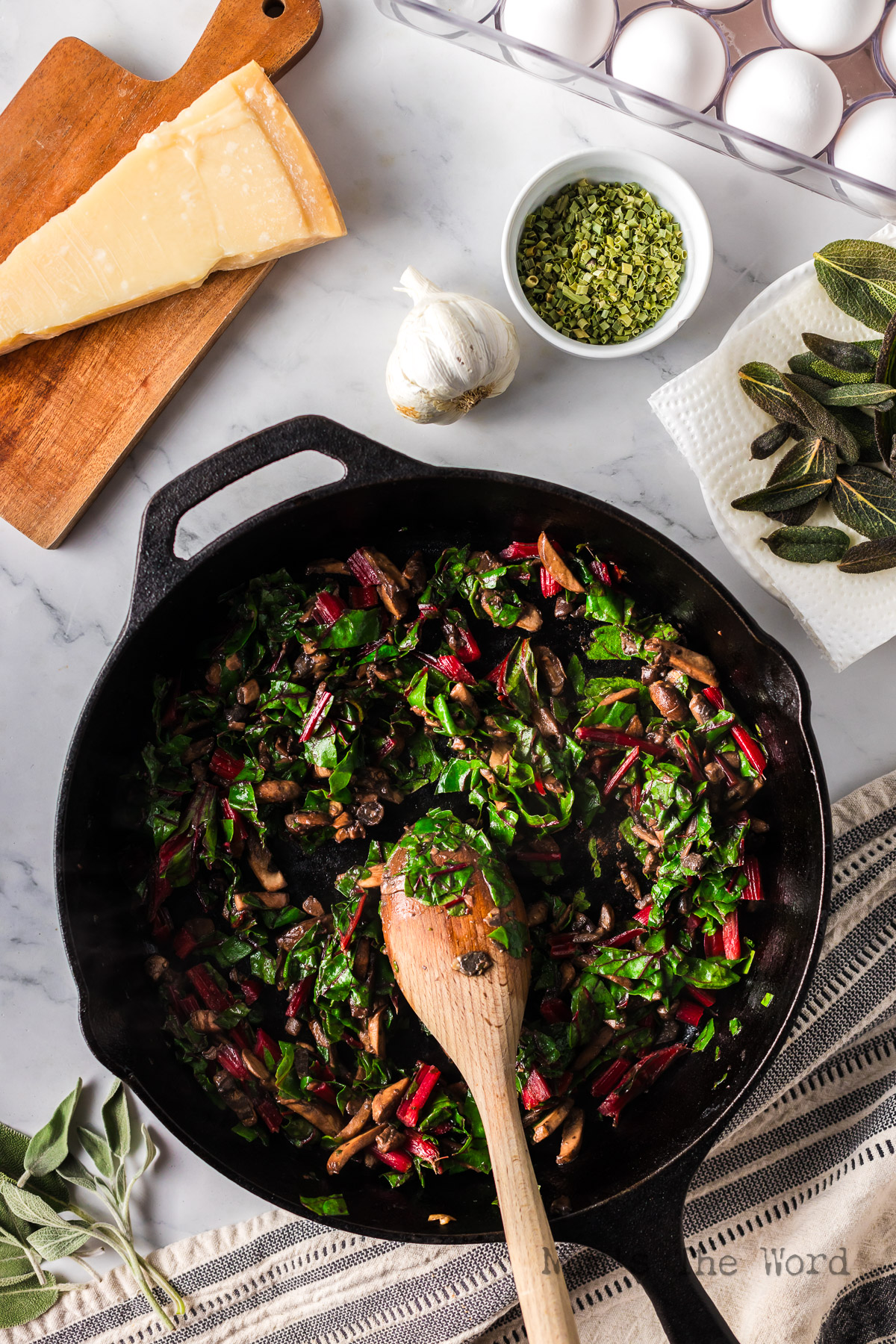
- Add the Swiss Chard. Sautee until wilted and remove from heat.
- Whisk eggs and milk. In a separate bowl, whisk together the eggs and milk This corporates air, which makes the frittata lighter.
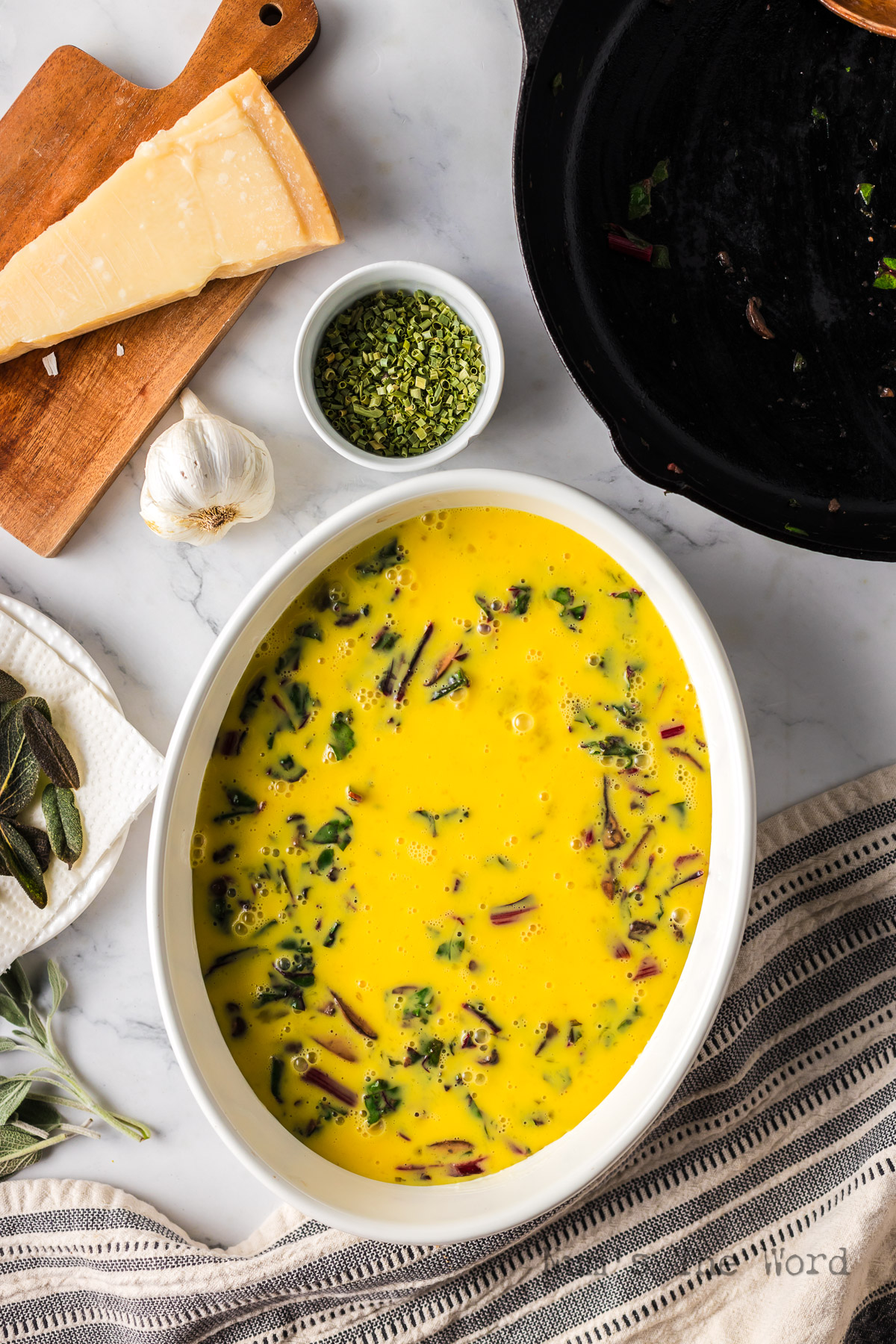
- Pour the eggs into the baking dish. Make sure the mushrooms and aromatics are evenly distributed across the pan. Pour the egg mixture over the top and use a spatula to gently spread everything into an even layer.
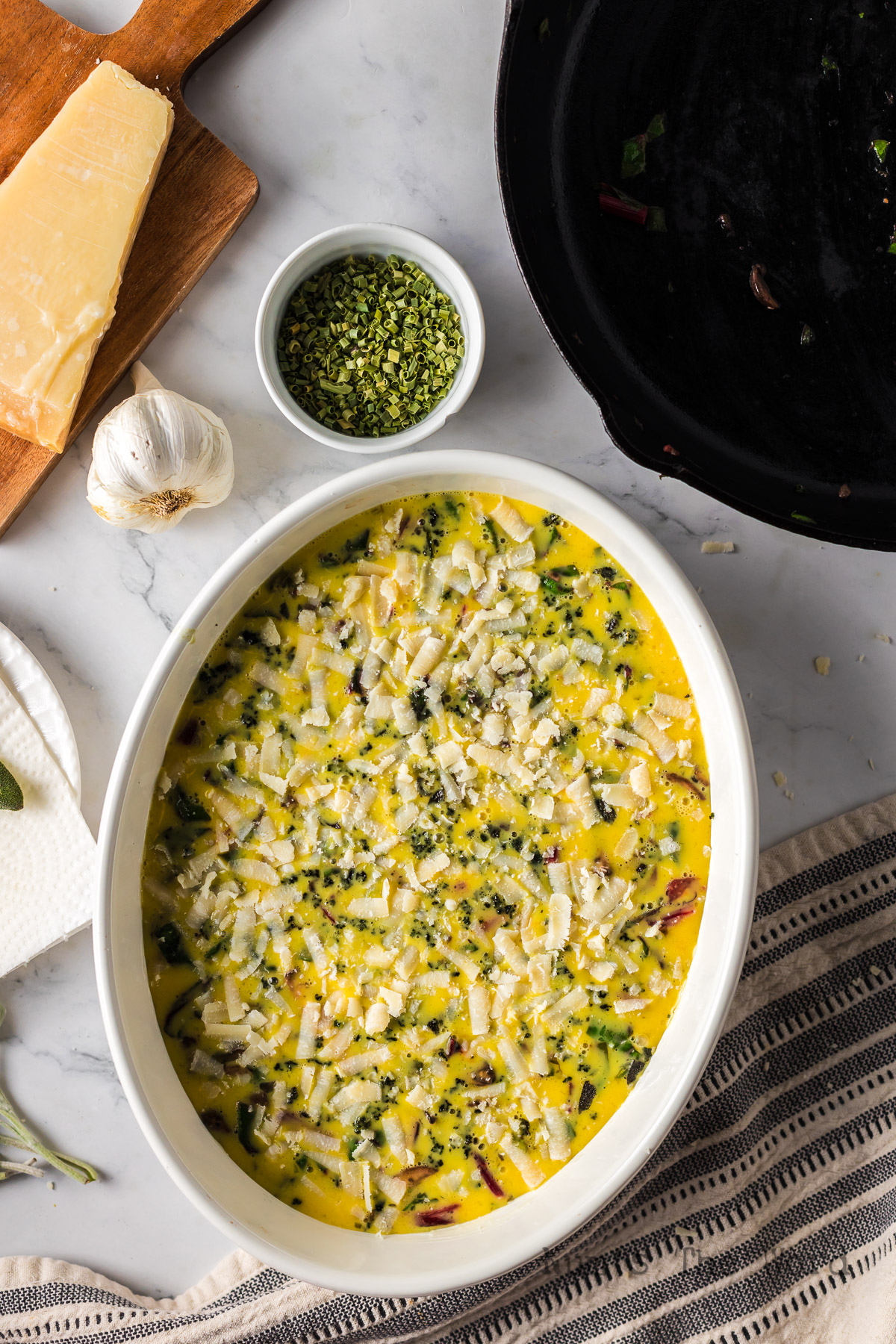
- Add sage and cheese. Sprinkle the sage over the top and then top with half the cheese.
- Bake: Bake in your preheated oven for 20 minutes.
- Topping: Without taking the frittata out of the oven, top with the remaining cheese and bake for an additional 15 minutes.
- Add the remaining cheese. Sprinkle the rest of the cheese evenly over the top of the frittata.
- Rest before serving. Pull the frittata out (use those oven mitts) and let the it rest for 5 minutes. This allows the eggs to finish cooking gently with residual heat and makes slicing cleaner.
Each step builds on the one before it. Miss the mushroom sear and your frittata will be watery. Crank the stovetop heat too high and the bottom will burn. Rush the broiler step and the top stays pale and sad. Follow the sequence and you’ll get it right.
How to Know It’s Done
Frittatas don’t come with a beep or a pop-up timer, so you need to rely on your senses.
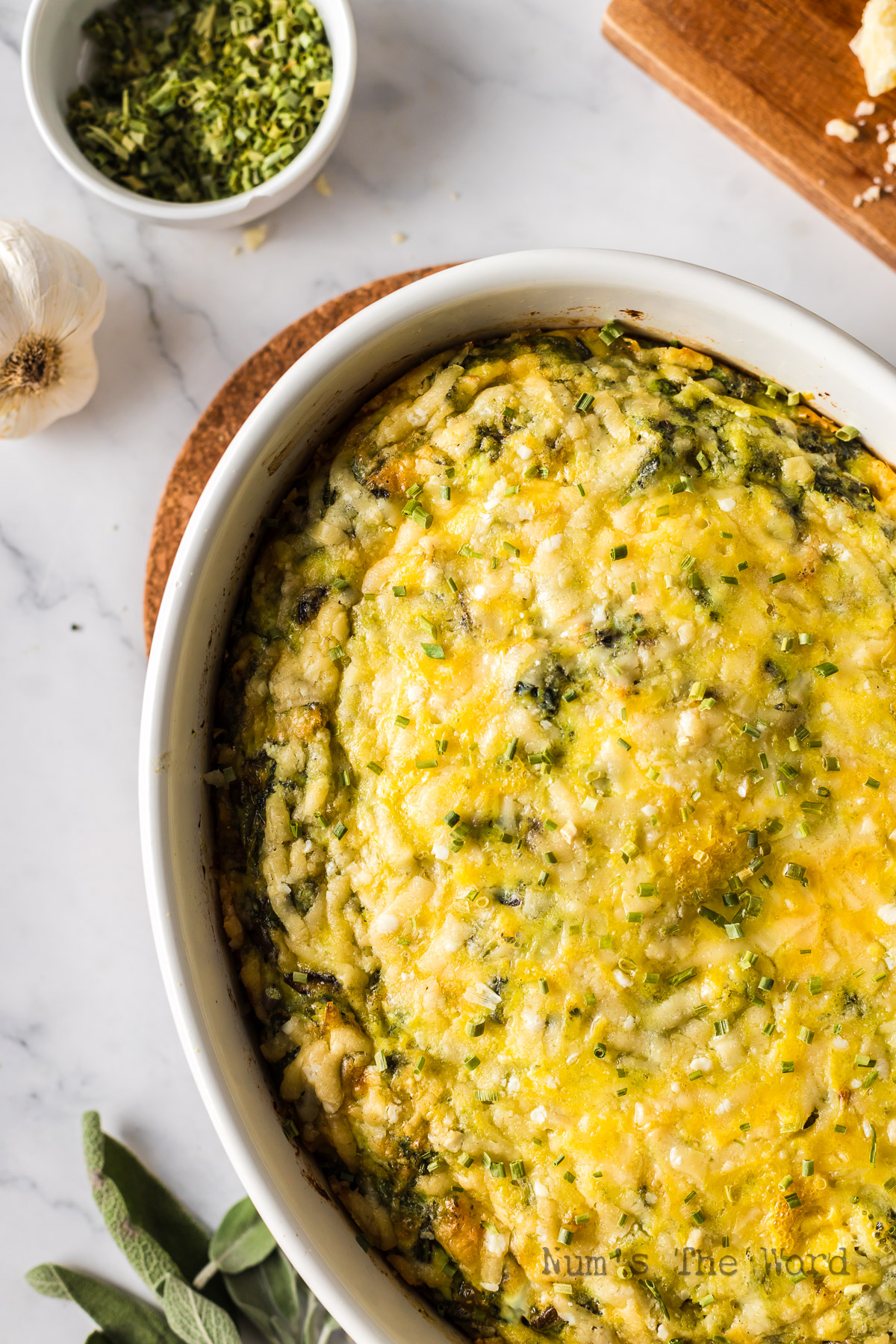
Look at the center. When you pull the skillet from the oven, the middle should jiggle slightly when you give the pan a gentle shake, like barely set Jell-O. It should not be liquid or sloshing. If it looks wet and runny, give it another 2 minutes in the oven. If it’s completely firm and doesn’t move at all, you’ve slightly overcooked it, but it’ll still taste fine.
Check the edges. The edges of the frittata should have pulled away from the pan just a little bit, and you should see golden-brown color where the eggs meet the edge of the pan. If the edges are still pale and stuck to the pan.
Touch the top. After the frittata has rested for a few minutes, press gently on the center with your finger. It should feel firm and springy like a fluffy frittata, not wet or squishy. If your finger sinks in and comes back wet, it needed more time to cook.
Smell it. A properly cooked frittata smells eggy, buttery, and slightly nutty from the browned cheese. If you smell burning or a harsh, acrid scent, something scorched. Pull it immediately.
The resting period is critical because the frittata continues to cook off the heat. What looks slightly underdone when you pull it from the oven will firm up perfectly after 5 minutes on the counter. Trust the process and don’t second-guess yourself into overcooking it.
Tips from the Pros
Professional cooks don’t wing frittatas. They follow a handful of specific techniques that separate the good from the great.
Season in layers. Add salt to the mushrooms while they cook, then again to the egg mixture. Seasoning at multiple stages builds deeper flavor than dumping all the salt in at the end.
Don’t overfill the pan. The egg mixture should come about three-quarters of the way up the sides of the skillet. Any higher and it’ll overflow or cook unevenly. If you have extra egg mixture, save it for scrambled eggs tomorrow.
Use room-temperature eggs. Cold eggs take longer to cook and can cause uneven setting. Pull your eggs out of the fridge 20 minutes before you start cooking, or place them in a bowl of warm water for 5 minutes.
Serving Suggestions
This mushroom frittata recipe is the rare dish that looks impressive but works just as well on a weeknight as it does at brunch.
Serve it straight from the pan for a rustic, family-style presentation.
For brunch, pair it with this 1 Hour Bread, Lemon Compound Butter, and Glazed Fruit Salad. The frittata is rich and savory, so bright, acidic sides balance the plate. Think sliced tomatoes with flaky salt, a pile of berries, or a grapefruit half.
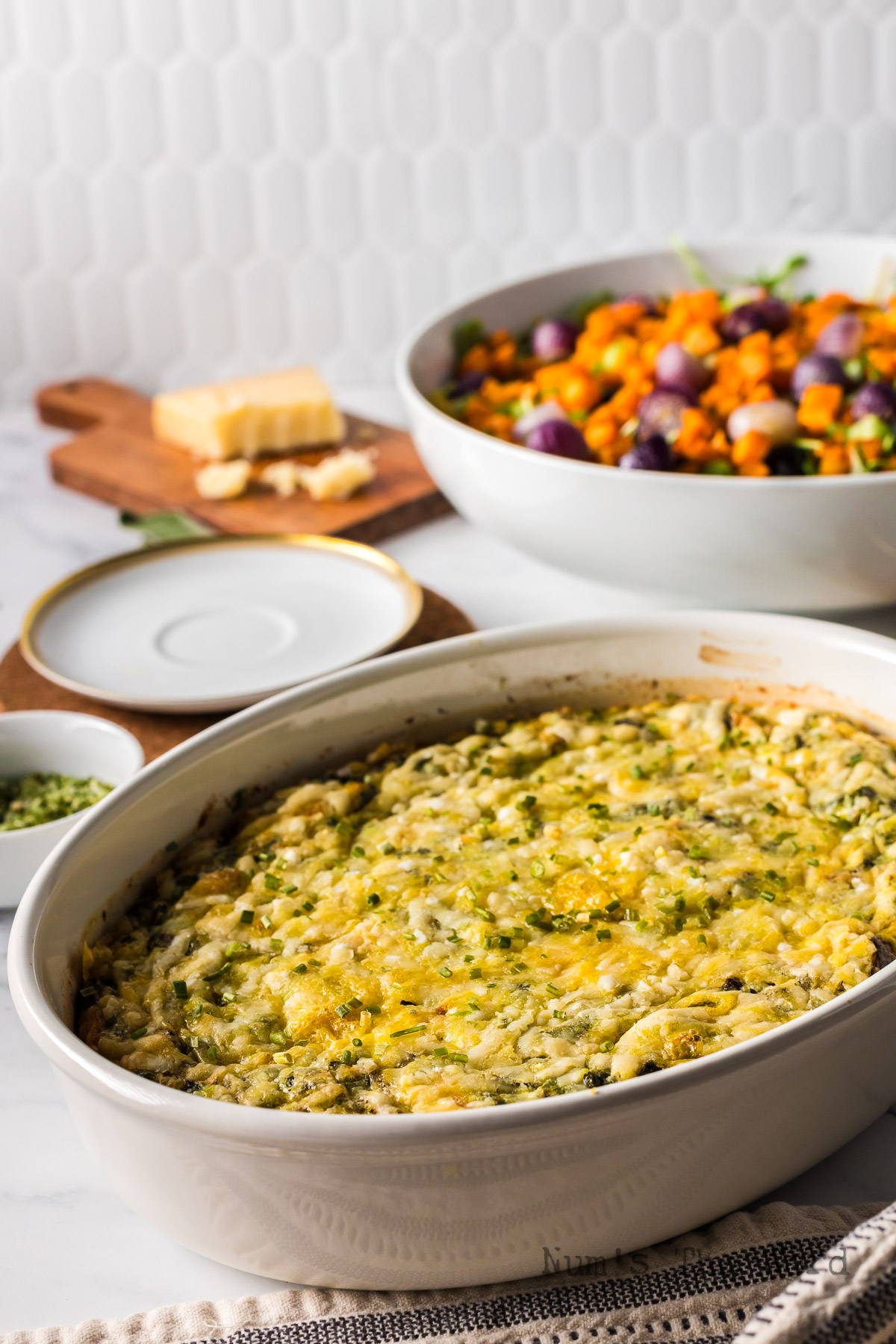
If you’re serving it for dinner, treat it like a main and add Lipton Onion Soup Mix Potatoes or a Roasted Butternut Salad on the side. It’s also excellent at room temperature, which makes it perfect for picnics, packed lunches, or any situation where reheating isn’t an option.
Cut any leftovers into squares and stack them in a container. They’ll keep their shape and make an easy grab-and-go breakfast or snack for the next few days.
Pairing Suggestions
Mushroom frittata is earthy, creamy, and rich, which means it plays well with sides that bring acidity, brightness, or crunch.
For sides, think about texture and acidity. A bitter greens salad with a sharp vinaigrette, Air Fryer Asparagus with lemon zest, or a Cherry Tomato Salad all work. Avoid heavy, creamy sides that compete with the frittata’s richness.
The goal is balance: let the frittata be the rich, savory star and surround it with things that wake up your palate.
Variations and Swaps
Once you’ve nailed the basic technique, a frittata becomes a template for whatever vegetables, cheeses, or proteins you have on hand.
Swap the mushrooms for zucchini, bell peppers, asparagus, or spinach. Just make sure to cook out any excess moisture before adding the eggs. Zucchini and spinach especially need to be squeezed dry or they’ll make the frittata watery.
Swap in Spinach: Make a spinach mushroom frittata instead of Swiss Chard.
Add cooked protein like crumbled bacon, diced ham, cooked sausage, or shredded rotisserie chicken. Stir it in with the mushrooms before adding the eggs. Keep the total amount under one cup so the frittata doesn’t become too dense.
Change the cheese. Feta adds a briny, tangy punch. Goat cheese makes it creamy and sophisticated. Fontina melts beautifully and adds mild, buttery flavor. Avoid pre-shredded mozzarella, which tends to be watery and flavorless.
Make it dairy-free by skipping the milk and cheese entirely or using a non-dairy milk like oat or almond milk and a plant-based cheese. The texture will be slightly less creamy, but it still works.
Go Mediterranean by adding sun-dried tomatoes, Kalamata olives, and feta. Finish with fresh oregano or basil.
Go Mexican by stirring in sautéed poblano peppers, corn, and pepper jack cheese. Top with avocado, salsa, and cilantro.
The foundation stays the same. The flavor profile is yours to shape.
Storage Tips
Frittatas keep beautifully, which makes them one of the best make-ahead breakfast or lunch options.
Let the frittata cool completely before storing. Wrap it tightly in plastic wrap or transfer slices to an airtight container. It’ll keep in the fridge for up to 4 days.
To reheat, use the oven or toaster oven instead of the microwave. Place slices on a baking sheet and warm at 350 degrees for 8 to 10 minutes. This keeps the texture intact and prevents the eggs from turning rubbery. The microwave works in a pinch, but it makes the frittata spongy and sad.
You can freeze frittata slices for up to 2 months. Wrap each slice individually in plastic wrap, then stack them in a freezer bag. Thaw overnight in the fridge and reheat in the oven. The texture won’t be quite as silky as fresh, but it’s still completely edible and convenient.
Frittata is also excellent cold, straight from the fridge. The flavors meld and concentrate as it sits, and the texture firms up just enough to make it easy to eat with your hands.
Leftover Transformations
Don’t just reheat leftover frittata. Turn it into something new. Leftovers are great for meal prep and a great way of adding protein into your diet.
One of our favorite ways is to slice it thin and layer it into a sandwich with arugula, tomato, and mayo on crusty bread. The frittata acts like a savory, protein-packed filling that’s way more interesting than deli meat.
Chop it into cubes and toss it into a grain bowl with quinoa, roasted vegetables, and a lemony tahini dressing. It adds richness and protein without requiring any additional cooking.
Break it into small cubes and fold it into a wrap with hummus, cucumber, and greens. It’s a fast, packable lunch that doesn’t need reheating.
Cube it and add it to a breakfast hash. Toss the frittata cubes with crispy roasted potatoes, sautéed onions, and a fried egg on top. It’s a double-egg situation that absolutely works.
Use cold frittata as the base for a composed salad plate. Add a handful of mixed greens, some pickled vegetables, olives, and a drizzle of good olive oil. It’s light, elegant, and takes about two minutes to assemble.
Leftover frittata isn’t a compromise. It’s an opportunity to build a completely different meal with zero effort and maximum return.
Additional Breakfast Recipes You’ll Love…
- Easy Breakfast Empanadas Recipe
- Lentils and Eggs
- Breakfast Pizza Recipe
- Red Pepper and Spinach Quiche
- Denver Omlette
- Thin Buttermilk Pancake Recipe
- Ham Casserole with Hash Browns
- Breakfast Sandwich Rolls
A mushroom frittata is the kind of dish you’ll make once, then keep in rotation forever. It’s flexible, forgiving, and delivers consistent results as long as you respect the technique.
Once you’ve mastered the basic method, you’ll stop seeing it as a recipe and start seeing it as a framework.
Mushrooms today, zucchini tomorrow, leftover roasted vegetables next week. The formula stays the same. The flavor changes every time. That’s the power of a frittata done right.
Mushroom Frittata
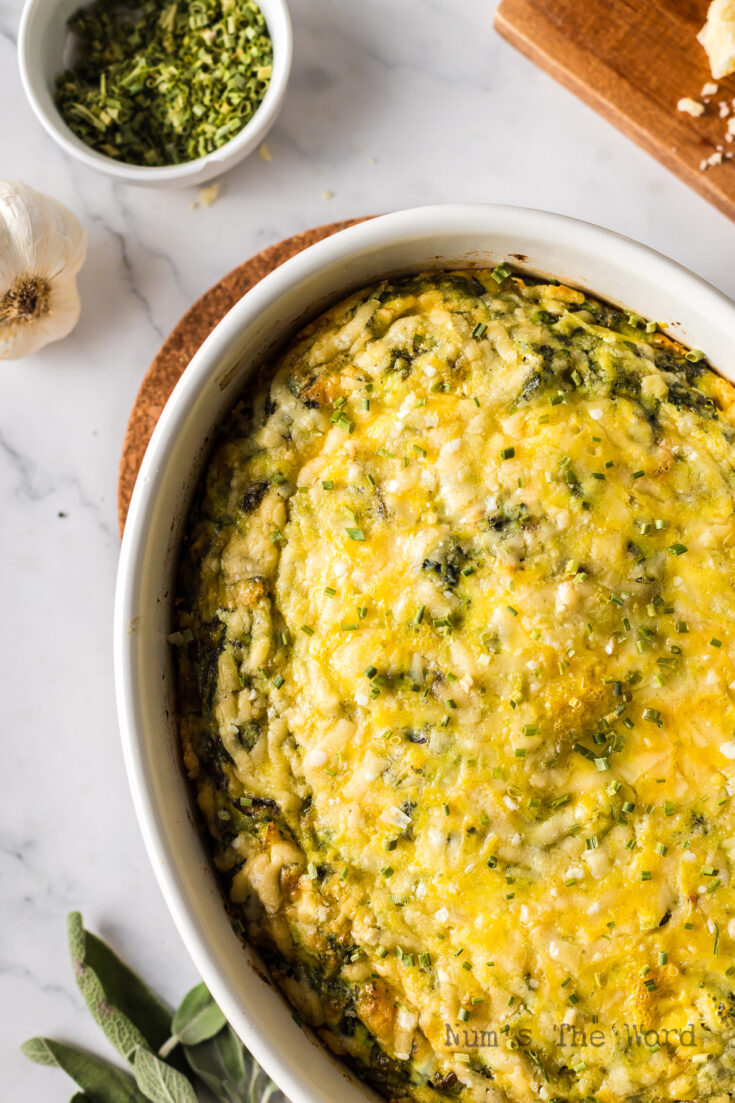
Savory, fluffy, and packed with earthy flavor, this Mushroom Frittata is an easy, protein-packed dish perfect for breakfast, brunch, or a light dinner.
Ingredients
Instructions
- Preheat oven to 350° F.
- Grease a 9 x 13 baking dish with oil or butter.
- In a large skillet, over medium heat, lightly fry the sage leaves in olive oil. Remove to a paper towel lined plate and let cool.
- In same skillet, adding a little olive oil if necessary, add the garlic and sauté until fragrant.
- Add mushrooms. Sauté until they pass the point of giving off moisture and just start to stick to the pan a little.
- Add Swiss chard. Sauté until wilted. This doesn't take long. Remove skillet from heat.
- Combine eggs and milk in a large mixing bowl and beat until well combined.
- Distribute cooked mushrooms and Swiss chard on the bottom of your baking dish.
- Pour egg and milk over the vegetables.
- Crinkle the fried sage over the top, try to distribute evenly.
- Sprinkle half the Parmigiano Reggiano on top.
- Bake for 20 minutes.
- Spread the other half of the cheese on top.
- Bake until cooked through, about another 15 minutes.
- Let sit for 5 minutes before slicing and serving.
Notes
Frittata will rise while baking and may start resembling the Hunchback of Notre Dame. It'll settle as it cools.
Nutrition Information:
Yield:
12Serving Size:
1Amount Per Serving: Calories: 124Total Fat: 8gSaturated Fat: 3gUnsaturated Fat: 5gCholesterol: 281mgSodium: 142mgCarbohydrates: 3gFiber: 1gSugar: 1gProtein: 10g